
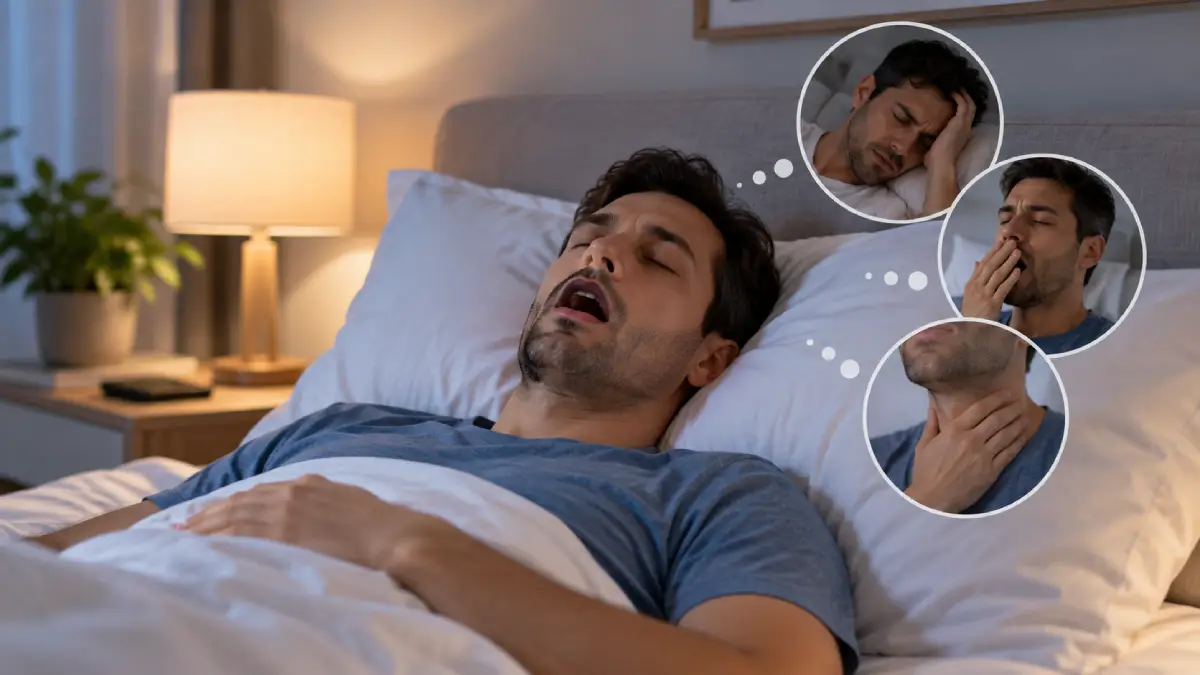
You may have sleep apnea if you regularly snore loudly, gasp or choke during sleep, stop breathing at night, wake with a dry mouth or headache, or feel unusually tired during the day. Because many of these symptoms occur while you are asleep, you may not recognize them yourself. A bed partner may notice breathing pauses or gasping before you do.
If these signs sound familiar, talk with a healthcare provider about whether a sleep evaluation is appropriate. A dentist can also play an important role by screening for risk factors, evaluating your oral and airway anatomy, and helping with oral appliance treatment when appropriate.
What Is Sleep Apnea?
Sleep apnea is a sleep-related breathing disorder in which breathing repeatedly stops and starts during sleep. These interruptions can reduce the amount of oxygen reaching the body and disrupt normal sleep.
The most common form is obstructive sleep apnea, or OSA. It occurs when the upper airway becomes blocked during sleep, often because tissues in the throat relax and narrow the airway. Central sleep apnea is different. It occurs when the brain does not send the signals needed to control breathing properly.
Understanding the types of sleep apnea matters because the underlying causes and appropriate treatments can differ. A sleep study can help determine which type is present and how serious the condition is.
What Are the Most Common Signs of Sleep Apnea?
Some signs of sleep apnea happen while you are asleep, while others become noticeable during the day. You may not experience every symptom.
Symptoms During Sleep
A partner or family member may notice:
- Loud or frequent snoring
- Pauses in breathing
- Gasping, choking, or snorting during sleep
- Restless sleep
- Frequent nighttime awakenings
- Waking up repeatedly to urinate
The NHLBI identifies breathing pauses, loud snoring, and gasping for air as common nighttime symptoms.
Symptoms During the Day
You may notice:
- Excessive daytime sleepiness
- Persistent fatigue
- Difficulty concentrating
- Problems with memory
- Morning headaches
- Dry mouth after waking
- Difficulty staying alert
- Changes in mood or irritability
Daytime sleepiness can sometimes be overlooked because people may attribute it to a busy schedule, stress, or not getting enough sleep. However, persistent daytime fatigue combined with nighttime breathing symptoms deserves attention.
How Can You Check Yourself for Sleep Apnea?
You cannot reliably diagnose sleep apnea at home based only on symptoms. However, you can look for patterns that may indicate you should speak with a healthcare provider.
Ask yourself:
- Do I snore loudly or frequently?
- Has someone told me that I stop breathing while sleeping?
- Do I wake up choking or gasping?
- Do I wake with a dry mouth or headache?
- Am I unusually tired during the day?
- Do I have difficulty concentrating or staying awake?
- Do I wake repeatedly during the night?
- Do I have risk factors associated with sleep apnea?
A healthcare provider may use questionnaires to assess your risk, but these tools do not replace diagnostic testing. The NHLBI explains that a sleep study can help determine whether sleep apnea is present, which type you have, and how serious it is.
Is There an Easy Way to Tell If You Have Sleep Apnea?
There is no simple home test that can confirm the condition from symptoms alone. Snoring and daytime tiredness can have many causes, so a proper evaluation is important.
If someone regularly sleeps near you, ask whether they have noticed pauses in your breathing, gasping, or unusually loud snoring. Their observations can provide useful information that you may not be able to identify yourself.
What Causes Sleep Apnea?
If you are wondering what causes sleep apnea, the answer depends on the type.
Obstructive sleep apnea develops when the upper airway becomes narrowed or blocked during sleep.
Factors that can increase the risk include:
- Excess body weight
- A larger neck, tongue, or tonsils
- Certain facial or airway structures
- Increasing age
- Family history
- Alcohol use
- Smoking
- Certain medical conditions
Central sleep apnea has different sleep apnea causes. It can occur when conditions affecting the brain's control of breathing interfere with normal respiratory signals. Heart failure, stroke, certain neurological conditions, opioid use, and other factors can increase the risk of central sleep apnea.
Having one or more risk factors does not automatically mean you have the condition. A person with a lower body weight, for example, can still develop obstructive sleep apnea because airway anatomy and other factors also matter.
Can Sleep Apnea Go Away on Its Own?
Sleep apnea should not be assumed to disappear without treatment. Some risk factors can change over time, and lifestyle changes may improve obstructive sleep apnea in some people, but persistent symptoms warrant professional evaluation.
For example, maintaining a healthy weight, exercising regularly, limiting alcohol, quitting smoking, and sleeping on your side may help some people with obstructive sleep apnea. These measures should not be considered a substitute for evaluation or prescribed treatment.
If you have already been diagnosed, your provider may recommend follow-up testing to determine whether treatment is working.
What Are the Potential Effects of Untreated Sleep Apnea?
Leaving sleep apnea untreated can affect more than your sleep quality. Repeated breathing interruptions can contribute to low oxygen levels and fragmented sleep.
Over time, untreated sleep apnea has been associated with an increased risk of several health problems, including:
- High blood pressure
- Cardiovascular disease
- Atrial fibrillation
- Stroke
- Heart attack
- Heart failure
- Pulmonary hypertension
- Problems with concentration and memory
The NHLBI notes that untreated sleep apnea can interfere with concentration, memory, decision-making, and behavior, while also increasing the risk of cardiovascular problems and stroke.
This does not mean that everyone with sleep apnea will develop these conditions. Rather, it is one reason persistent symptoms should be evaluated instead of dismissed as ordinary snoring or poor sleep.
What Is Severe Sleep Apnea?
Severe sleep apnea refers to a higher frequency of breathing disruptions during sleep, as determined through sleep testing. One commonly used measure is the apnea-hypopnea index, or AHI, which reflects the number of breathing events per hour of sleep.
The AHI is used along with other clinical information to assess severity and guide treatment. A sleep study, rather than symptoms alone, is needed to determine how severe the condition is.
If your symptoms are significant, particularly if you experience pronounced daytime sleepiness or someone observes repeated breathing pauses, speak with a healthcare provider about appropriate testing.
How Is Sleep Apnea Diagnosed?
A sleep study is commonly used to diagnose sleep apnea. Depending on your situation, testing may take place at a sleep center or may be performed at home with a portable monitoring device.
The evaluation can help determine:
- Whether you have sleep apnea
- Which type is present
- How frequently breathing disruptions occur
- How severe the condition is
- Which treatment options may be appropriate
Your provider may also review your symptoms, medical history, medications, family history, and other health conditions that could affect your breathing during sleep.
A dentist should not replace a sleep physician in diagnosing sleep apnea. Instead, dental professionals can help identify patients who may be at risk and collaborate with medical providers when further evaluation is needed.
How Can a Dentist Help With Sleep Apnea?
A dentist can be an important part of the care team, particularly when evaluating oral and airway characteristics associated with obstructive sleep apnea.
During a dental examination, a dentist may recognize features or symptoms that warrant further evaluation, such as:
- A large tongue or tonsils
- A high-arched palate
- A smaller or recessed lower jaw
- A larger neck circumference
- Loud or irregular snoring
- Reported breathing pauses
- Nighttime choking or gasping
The ADA recommends that dentists who identify signs or risk factors associated with obstructive sleep apnea refer patients to a physician or sleep specialist for appropriate evaluation. At Lynn Dental Care, both Dr. Lynn and Dr. Madeline can evaluate your oral and airway characteristics, discuss whether a sleep evaluation is appropriate, and coordinate with your physician or sleep specialist when further testing is needed.
Can a Dentist Diagnose Sleep Apnea?
A dentist can screen for risk factors and symptoms, but a suspected case generally requires medical evaluation and appropriate sleep testing for diagnosis.
This distinction is important. A dental examination can identify clues that something may be affecting your airway, but it should not be used as a substitute for a diagnostic sleep study when one is indicated.
How Does a Dental Appliance Help With Sleep Apnea?
For certain patients with obstructive sleep apnea, a custom oral appliance can help keep the airway open during sleep. These devices are designed to reposition structures such as the lower jaw and tongue to reduce the likelihood of airway collapse.
Oral appliance therapy may be considered for adults with mild to moderate obstructive sleep apnea and for some patients with more severe disease who cannot tolerate positive airway pressure therapy. The appropriate treatment depends on the individual's diagnosis and medical assessment.
When an oral appliance is prescribed, the ADA recommends a custom, adjustable device rather than a non-custom appliance. Ongoing dental follow-up is also important because oral appliances can cause dental or jaw-related side effects in some patients.
What Can Help Sleep Apnea Besides a Dental Appliance?
Treatment is not one-size-fits-all. Depending on the type and severity of the condition, treatment may include:
- Positive airway pressure therapy: CPAP and other PAP devices use air pressure to help keep the airway open during sleep.
- Oral appliance therapy: A custom device may be appropriate for selected patients with obstructive sleep apnea.
- Lifestyle changes: Regular exercise, maintaining a healthy weight, limiting alcohol, quitting smoking, and sleeping on your side may help some patients.
- Surgery or other therapies: Selected patients may be considered for surgical procedures or other treatments when appropriate.
PAP therapy remains a common treatment for sleep apnea, while oral devices may be prescribed for people who cannot tolerate CPAP or who are appropriate candidates for this approach.
A dentist should therefore be viewed as one part of a broader treatment team rather than as a replacement for medical sleep care.
Are the Pillow Trick and Other Home Remedies Reliable?
Searches for a "pillow trick" or other quick fixes can make sleep apnea treatment sound simpler than it really is. Adjusting your sleeping position may help some people, particularly because sleeping on your side can reduce airway obstruction for certain patients. However, there is no universal pillow position that can diagnose or cure sleep apnea.
Likewise, internet claims about specific exercises, supplements, or techniques should be approached carefully. If you have persistent sleep apnea symptoms, rely on an appropriate medical evaluation rather than experimenting with unproven treatments.
NHLBI guidance recognizes side sleeping and healthy lifestyle changes as measures that may help, but treatment should be based on the individual's condition and clinical evaluation.
Can Losing Weight Improve Sleep Apnea?
Weight can be an important factor in obstructive sleep apnea. Excess tissue around the neck and upper airway can contribute to airway narrowing during sleep, and maintaining a healthy weight may help prevent or treat OSA associated with excess weight.
However, there is no specific amount of weight that guarantees sleep apnea will disappear. Someone can continue to have obstructive sleep apnea after losing weight, particularly when other anatomical or medical factors contribute to airway obstruction.
If weight is part of your treatment plan, discuss appropriate goals with your healthcare provider rather than relying on a fixed number such as 20 pounds.
When Should You Talk to a Dentist About Sleep Apnea?
Consider bringing up your sleep concerns during a dental appointment if you regularly snore, wake with a dry mouth, experience nighttime gasping, or have a partner who notices breathing pauses.
A dentist may be able to identify oral or airway characteristics that warrant further evaluation and can coordinate with a physician or sleep specialist when appropriate. If you have already received a sleep apnea diagnosis and are considering an oral appliance, Dr. Lynn or Dr. Madeline can assess whether your teeth, jaw, and oral health are suitable for this type of treatment.
The earlier you address persistent symptoms, the sooner you can determine whether they are related to sleep apnea or another sleep or health condition.
Frequently Asked Questions
Can You Have Sleep Apnea Without Snoring?
Yes. Although loud snoring is common, not everyone with sleep apnea snores noticeably, so other symptoms such as breathing pauses, gasping, and excessive daytime sleepiness also matter.
Does Dry Mouth Mean You Have Sleep Apnea?
Dry mouth can occur with sleep apnea, but it can also have other causes, so it is not enough by itself to confirm the condition.
Is Sleep Apnea Only a Problem for Older Adults?
No. Sleep apnea can occur at different ages, although certain risk factors become more common as people get older.
Can Sleep Apnea Cause Morning Headaches?
Yes, morning headaches can occur with sleep apnea, although headaches can have many other causes as well.
Can an Oral Appliance Replace CPAP?
An oral appliance may be an appropriate alternative for some adults with obstructive sleep apnea, but whether it can replace PAP therapy depends on the individual's diagnosis, severity, and ability to tolerate treatment.
Get Sleep Apnea Screening and Dental Support in Dallas
Get Sleep Apnea Screening and Dental Support in Dallas
Lynn Dental Care provides sleep apnea consultations and custom-fitted oral appliance treatment in Dallas. Dr. Lynn and Dr. Madeline use airway evaluation technology and offer custom sleep apnea appliances for patients who may benefit from this type of treatment.
If you or your partner has noticed loud snoring, breathing pauses, gasping, or other symptoms associated with sleep apnea, contact Lynn Dental Care to schedule a consultation with Dr. Lynn or Dr. Madeline and determine whether an airway evaluation or dental sleep consultation is appropriate. Lynn Dental Care is located at 6190 Lyndon B Johnson Fwy, Suite 900, Dallas, TX 75240, and can be reached at (972) 934-1400.
