
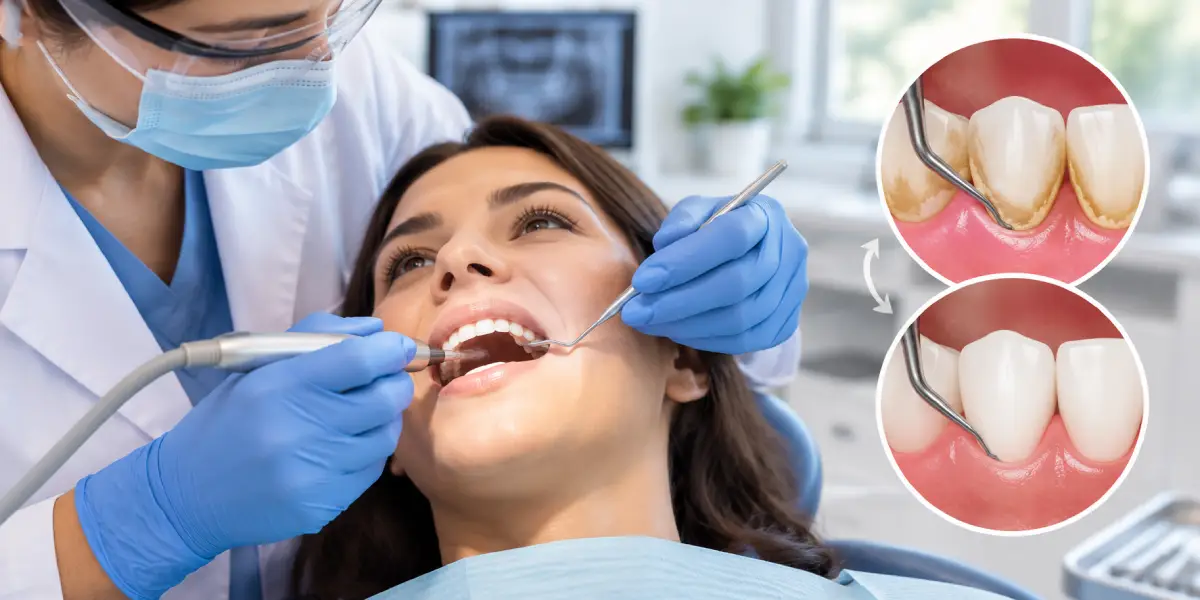
Scaling and root planing is a nonsurgical deep-cleaning treatment used to treat periodontal disease. It removes plaque and hardened tartar from above and below the gumline and smooths the tooth roots so the gums can heal more effectively. The treatment may be recommended when gum pockets are too deep for routine cleaning to adequately remove deposits.
What Is Scaling and Root Planing?
If your dentist or periodontist has recommended a deep cleaning, you may be wondering what the procedure actually involves. Scaling and root planing is a professional treatment designed to clean areas affected by periodontal disease, particularly below the gumline where a regular toothbrush cannot reach effectively.
The procedure has two main parts. Scaling removes plaque and tartar from the teeth, including deposits below the gumline. Root planing focuses on cleaning and smoothing the exposed root surfaces so bacterial deposits and toxins are removed and the gums have a cleaner surface against which to heal.
What Does Scaling Involve?
Scaling is the process of removing plaque and calculus, commonly called tartar, from the tooth surfaces. When periodontal pockets develop, these deposits can accumulate below the gumline and become difficult or impossible to remove with normal brushing and flossing.
During professional treatment, dental instruments are used to remove these deposits from the affected areas. Depending on the patient's needs, treatment may involve several areas of the mouth and may be completed over more than one appointment.
What Does Root Planing Involve?
Root planing focuses on the surfaces of the tooth roots below the gumline. The goal is to remove bacterial deposits and create a cleaner, smoother root surface that supports periodontal healing.
Root planing does not mean changing the natural shape of a healthy tooth. Instead, the dental professional carefully cleans the affected root surfaces as part of the overall scaling and root planing procedure.
When Is Scaling and Root Planing Recommended?
Not everyone who needs dental cleaning needs a deep cleaning. Routine preventive cleanings and periodontal treatment serve different purposes.
The ADA describes scaling and root planing as a treatment for periodontal disease, rather than a routine preventive cleaning. It may be recommended when periodontal pockets are deep enough that ordinary professional cleaning cannot adequately reach the affected areas.
Before recommending treatment, a dental professional may evaluate your gums, measure periodontal pocket depths, review your medical history, and take X-rays when appropriate. X-rays can help identify bone loss associated with periodontal disease.
Signs that may lead to a periodontal evaluation include:
- Bleeding or swollen gums
- Persistent gum inflammation
- Deep periodontal pockets
- Gum recession
- Tartar buildup below the gumline
- Loose or shifting teeth
- Bone loss associated with periodontal disease
The extent of disease matters because treatment recommendations vary according to the severity and location of the periodontal problem.
What to Expect During a Scaling and Root Planing Procedure
Understanding the process can make a deep cleaning feel much less intimidating. Your exact experience will depend on the condition of your gums, the number of areas being treated, and your dental professional's treatment plan.
Before Treatment
Your dental professional will first evaluate your periodontal health. This may include measuring the spaces between your gums and teeth, reviewing your medical history, and taking dental X-rays when indicated.
If treatment is recommended, your dentist or periodontist can explain which areas need attention and whether the procedure will be completed during one appointment or divided into multiple visits.
During Treatment
The dental professional uses instruments to remove plaque and tartar from the tooth surfaces, including areas below the gumline. Root planing then cleans and smooths the affected root surfaces.
Local anesthesia may be used to make treatment more comfortable, particularly when the areas being treated are sensitive or require deeper cleaning. The ADA notes that dental scaling and root planing may require local anesthetic and can take more than one visit.
Depending on the extent of periodontal disease, your provider may treat different sections of the mouth during separate appointments.
After Treatment
It is normal for the gums to feel tender after treatment. The ADA notes that patients may experience pain for a day or two and tooth sensitivity for up to about a week after deep cleaning. Some patients may also experience temporary gum swelling, tenderness, or bleeding.
Your dental professional will provide aftercare instructions based on your treatment. You may also have a follow-up appointment so your gums can be evaluated and periodontal pocket depths can be reassessed.
Does Scaling and Root Planing Really Work?
Yes. Evidence-based dental guidelines support scaling and root planing as an initial nonsurgical treatment for chronic periodontitis. The ADA's clinical practice guideline found a moderate benefit from the treatment and concluded that its benefits outweigh potential adverse effects for appropriate patients.
The goal is to reduce the bacterial deposits associated with periodontal disease and create conditions that allow the periodontal tissues to heal. However, scaling and root planing is not a permanent cure that means periodontal disease can never return.
The American Academy of Periodontology notes that many patients do not need additional treatment after scaling and root planing, but most patients with periodontal disease require ongoing periodontal maintenance to help maintain periodontal health.
How Long Does It Take to Recover From Root Planing and Scaling?
Recovery varies by patient and by the extent of treatment. Mild soreness can occur for a day or two, while tooth sensitivity may last for up to about a week.
The ADA notes that periodontal tissues can take approximately four weeks to demonstrate the optimal effects of nonsurgical therapy, although individual healing and treatment response can vary.
How Many Times Does a Person Need Root Scaling and Planing?
There is no fixed number of sessions required for everyone because treatment depends on the extent and distribution of periodontal disease. Some patients may need several treatment sessions to thoroughly treat the affected areas, followed by ongoing periodontal maintenance.
How Painful Is Scaling and Root Planing?
Scaling and root planing can cause some discomfort, but local anesthesia can be used when needed to improve comfort during treatment. The amount of discomfort afterward varies from person to person.
After treatment, temporary gum tenderness and tooth sensitivity are possible. The ADA reports that sensitivity may last for up to about a week, while pain may occur for a day or two.
If you are nervous about discomfort, tell your dental professional before treatment. They can explain the anesthesia and comfort measures available for your particular procedure.
How Long Does It Take to Heal After Scaling and Root Planing?
Healing depends on the severity of periodontal disease and how your gums respond to treatment. Temporary tenderness or sensitivity is common, but the periodontal tissues continue healing after the appointment.
The ADA notes that periodontal tissues may require approximately four weeks to demonstrate the optimal effects of nonsurgical treatment. Your dental professional may schedule a follow-up evaluation to assess healing and determine whether additional treatment is needed. (American Dental Association)
How Long Will My Gums Last After Scaling and Root Planing?
There is no set period that determines how long the results will last because periodontal health depends heavily on ongoing plaque control and professional maintenance. The American Academy of Periodontology notes that most patients require ongoing maintenance therapy after treatment to sustain periodontal health.
Will My Gums Go Back to Normal After Deep Cleaning?
Inflamed gums can become healthier after periodontal treatment, but the extent of improvement depends on how advanced the disease was before treatment. Periodontitis can permanently damage supporting bone and tissues, so treatment aims to control the disease and prevent further progression rather than simply return every affected area to its original condition.
What Are the Risks and Disadvantages of Scaling and Root Planing?
Like any dental treatment, scaling and root planing can have temporary side effects. Common effects include gum tenderness, minor bleeding, and tooth sensitivity after treatment.
Some patients may also notice that their teeth appear longer after treatment. This can happen when swollen gum tissue becomes healthier and inflammation decreases, revealing more of the natural tooth surface.
The ADA's clinical guideline concluded that the benefits of scaling and root planing outweigh potential adverse effects when it is used appropriately for chronic periodontitis.
What Are the Risks of Root Planing?
The potential risks are generally related to temporary sensitivity, tenderness, or bleeding rather than damage to healthy teeth. The appropriate approach depends on the patient's periodontal condition and should be determined after a professional evaluation.
It is also important to consider the risks of leaving periodontal disease untreated. Advanced periodontitis can damage the tissues and bone supporting the teeth and may eventually contribute to tooth loss.
Can Deep Cleaning Damage Your Teeth or Gums?
When appropriately performed for periodontal disease, deep cleaning is intended to remove disease-causing plaque and tartar rather than damage healthy teeth or gums. Scaling and root planing is an established nonsurgical periodontal treatment recommended for appropriate patients with periodontitis.
Patients may notice changes after treatment, such as increased tooth sensitivity or more visible areas of the teeth near the gumline. These changes can occur as inflammation and swelling decrease and should not automatically be interpreted as treatment-related damage.
The key is appropriate diagnosis and treatment. Scaling and root planing is not intended as a substitute for routine preventive cleaning in someone who does not have periodontal disease.
What Does Scaling and Root Planing Cost?
The cost of scaling and root planing varies depending on the extent of periodontal disease, how many areas require treatment, the number of visits, and the fees associated with care. Dental insurance coverage can also vary by plan.
The ADA notes that scaling and root planing is typically reported based on the number of teeth treated within a quadrant or partial quadrant, and insurance policies can have different coverage criteria.
For that reason, an online price range cannot reliably tell you what your treatment will cost. A periodontal evaluation and treatment plan can provide a more accurate estimate based on your specific needs.
How to Maintain Your Results After Scaling and Root Planing
Treatment does not eliminate the need for daily oral care. Plaque continues to form on the teeth, so maintaining the results of periodontal treatment requires consistent home care and professional follow-up.
The ADA recommends brushing twice a day with a soft toothbrush, cleaning between the teeth daily, eating a balanced diet, avoiding tobacco, and maintaining regular dental visits.
Your dentist or periodontist may also recommend periodontal maintenance appointments based on your individual condition. The American Academy of Periodontology notes that ongoing maintenance is important for sustaining periodontal health after nonsurgical treatment.
A good maintenance routine includes:
- Brush twice a day with fluoride toothpaste.
- Clean between your teeth every day.
- Follow your provider's recommended periodontal maintenance schedule.
- Avoid tobacco products.
- Report persistent bleeding, swelling, or sensitivity to your dental professional.
- Keep scheduled dental and periodontal evaluations.
Frequently Asked Questions About Scaling and Root Planing
What Is the Difference Between a Regular Cleaning and Scaling and Root Planing?
A regular preventive cleaning generally removes plaque and tartar from accessible tooth surfaces, while scaling and root planing treats deeper areas affected by periodontal disease.
What Is the Hardest Tooth to Scale and Root Plane?
The difficulty depends on the individual tooth and its root anatomy, pocket depth, and accessibility rather than one specific tooth always being the hardest to treat.
What Should I Avoid After Scaling and Root Planing?
Follow your dental professional's specific instructions and avoid activities or foods that irritate your treated gums while they recover.
What Happens If You Do Not Treat Periodontal Disease?
Untreated periodontitis can progressively damage the tissues and bone supporting your teeth and may eventually lead to tooth loss.
Can Scaling and Root Planing Reverse Gum Disease?
Scaling and root planing can control periodontal infection and inflammation, but established periodontitis requires ongoing management rather than a one-time cure.
Get Started With Periodontal Care at Lynn Dental Care
If you have bleeding gums, gum recession, deep periodontal pockets, or other signs of gum disease, Lynn Dental Care can evaluate your periodontal health and determine whether scaling and root planing or another treatment is appropriate. For patients seeking periodontal therapy in Dallas, TX, a professional evaluation can help identify the extent of periodontal disease and create a treatment plan based on your specific needs.
If you're concerned about your gum health, schedule an evaluation with Lynn Dental Care to discuss your symptoms and treatment options. Early professional care can help manage periodontal disease and protect the teeth and supporting tissues over time.
